
By Jack | 25 October 2026
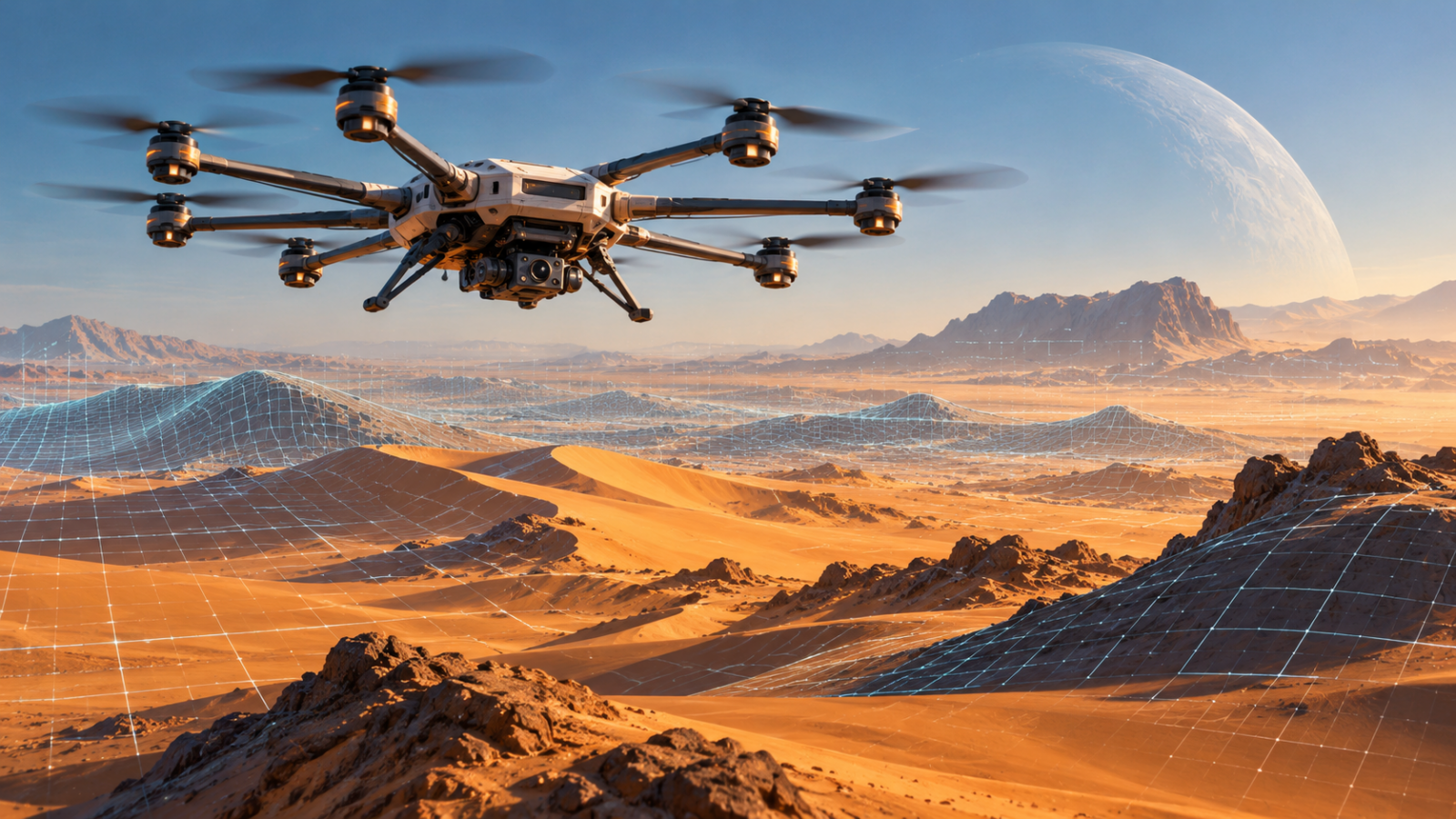
NASA’s Dragonfly team has completed a comprehensive simulated first flight on computer testbeds at Johns Hopkins Applied Physics Laboratory in Maryland. The 23 October account describes a rehearsal of autonomous flight and landing using flight-like avionics, rather than an actual flight on Titan.
The exercise brought flight software together with simulated input from navigation cameras, inertial measurement units and lidar. NASA’s stated schedule targets launch no earlier than 2028 and arrival at Saturn’s largest moon in 2034.
What this kind of test can establish
Connecting software and avionics tests how decisions move through a system: interpret sensor inputs, evaluate a landing area, command a manoeuvre and respond as the situation changes. This is a different question from whether an isolated algorithm performs well on a laptop.
A simulation is also bounded by its assumptions. Passing it supports confidence in the tested scenarios; it does not demonstrate survival of launch, interplanetary travel or every possible surface condition. Those require their own evidence.
Why landing-site selection is central
The account describes a simulated sequence in which the rotorcraft looks for a safe site, passes it and returns for descent. That makes the milestone more informative than a generic statement that a drone “flew.” It tests a chain of perception and control decisions that must work together.
For future progress reports, useful details include which sensors were included, whether real or simulated data were used, the conditions examined and the remaining integration work. Those distinctions prevent a computer rehearsal from being mistaken for a completed planetary mission.
NASA plans for Dragonfly to study Titan’s chemistry, geology and atmosphere. This report describes engineering preparation; it does not claim new measurements from Titan. Explore related reporting in our science coverage.
Reporting note: Prepared with AI assistance using the linked sources. No on-site reporting, interviews or independent testing is claimed. Thumbnail: AI-generated conceptual illustration, not a documentary photograph or measured data. Corrections: support@globaldailytimes.com.
Leave a Reply